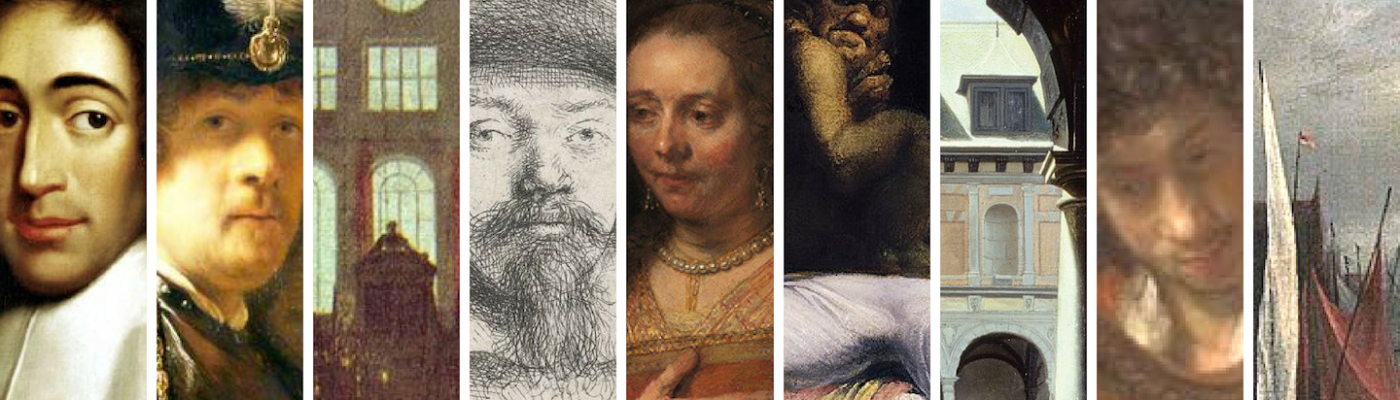
In’t Aepjen still exists as a tavern to this day, though it is monkey- and flea-free, and as far as I know, its patrons are not in danger of being pressed into three years’ service with the merchant marines.
Author: bawieland
Mennonites: Probably not what you think
The thing about Mennonites is there is no such thing as THE Mennonite church. It’s really the Mennonite churches, with no central authority. Some of the churches are much more liberal and some more traditional. And some of it depends on where in the world they are located.
You are not free
What we might see as free will is just an illusion, Spinoza says. If you read this post, it’s because it was always in your nature to do so. If not, well, that was in your nature, too.
A confession: I am not logical, and I’m just a bit intimidated by philosophy
I’d like to hear from other writers: How have you approached writing about characters or topics that were out of your league? How did you do research enabling you to write about them with authority? How did you write around things that remained above your pay grade? I want to know how we write about things we don’t understand logically, but get on different level.
You heard of the Protestants … now get ready for the Remonstrants
The Netherlands was a place where great forces were battling to see their view of the world hold sway. The Dutch Reformed Church with its predicant preachers, strict and orthodox, wanted to have the final world over the standards — both legal and social — being set in the new nation. They were opposed by the Remonstrants, their more liberal-minded rivals who were required to meet in private homes instead of public churches. And perhaps most powerful of all was the merchant class, whose vast wealth kept the heart of Amsterdam beating throughout the Dutch Golden Age.
Rembrandt: the king of drypoint
Few people realize that during his own lifetime, Rembrandt was equally — if not more — known for his printmaking. There are about 300 paintings attributed to the artist. He also made 290 plates for printmaking, and each of those was used to make “scores, even hundreds” of impressions of each.
The down and dirty on diamonds, part 2
In Part 1 of this series, I covered some of the natural history of diamonds — how they come to be, where they are found, the properties that make them unique and why, in turn, that makes them valuable to people. In this part, I’ll start to take a look at the human history of diamonds.
The down and dirty on diamonds, part 1
I’ll try to untangle some of this mystery and put diamonds in the historical context of the Dutch Golden Age, and along the way, I hope to give some helpful hints about how the average person can better shop for diamonds. After all, I’m not selling anything (other than hopefully a novel someday soon), so I have nothing to gain.
Still the waters
The Dutch had always been close to water, of course. It’s hard not to be when much of your nation is below sea level anyway. There’s an old saying that “God made the world, but the Dutch made the Netherlands,” and that’s certainly true when you consider that through the use of polders, dykes and sheer willpower, the Dutch pulled much of their land out of the sea.
Ten rando things about the Portuguese Jewish community in Amsterdam
Amsterdam may have been an incredibly open home to Jewish people in its time, but the welcome mat only stretched so far.
 Amsterdamned